Rain, rain
Stay and play
In fact, please stay
a few more days!
Yeah! The rain has come!! It's thundering, lightening, and RAINING!!! Oh, what a sweet, lovely sound this morning-- one of my favorites since I was a little girl.
Many thanks, Lord!
Thursday, July 30, 2009

Friday, July 24, 2009
Da Rules
Okay—so Stu has posted his thoughts about the “pork issue,” having finished Shocked By the Bible this week, and being somewhat intrigued by my original posting after I finished reading the book.
My original post said the chapter on unclean animals was interesting, and I had some thinking to do. Well, I’ve thought, and talked, and researched and now it’s time to share.
I remember growing up, actually addressing the issue of clean vs. unclean animals. But, the leaders in my congregation, in only the best interest of everyone involved, and with good hearts, I am most certain, taught us that the laws addressing the consumption of “unclean” animals went away with the coming of Jesus. There were various verses shared—basically saying that the old law is old law, and the new law says “Love one another.” Nothing about bacon in there, right?
Well, following this logic—there were some big laws set out in Leviticus. In chapter 20, the main idea is HOLINESS. In order to work towards holiness, one must stay away from mediums (magic), honor Mom and Dad, keep self adultery-free, no sexual perversion (incest, animals—that sort of thing), and make a distinction between clean and unclean animals while making the family menu. In following these rules, “You shall be holy to Me, for I the Lord am holy, and have separated you from the peoples, that you should be Mine” (v.26).
“But Tab...” you’re saying, “That’s Old Testament. I’m a New Testament Christian.” (that term never made sense to me—of COURSE you’re a New Testament Christian—Jesus as Christ the Messiah didn’t get here until the New Testament – as far as book chapters go, at least)
Okay, then—so read I Peter 1:13-16:
“Therefore gird up the loins of your mind, be sober, and rest your hope fully upon the grace that is to be brought to you at the revelation of Jesus Christ; as obedient children, not conforming yourselves to the former lusts, as in your ignorance; but as He who called you is holy, you also be holy in all your conduct, because it is written, ‘Be holy, for I am holy.’”
Now, has the definition of holy changed that much from the Old Testament to the New? With all understanding that “holy” is not the same as “holier than thou,” and that we all sin, it doesn’t change the fact that we’ve been told to strive towards holiness—to strive to be more Christ-like. In the New Testament, nevertheless.
Things have changed since the Old Testament times, but in a different way. During O.T. times, Jerusalem was God’s chosen people. The End. No more allowed—just Jerusalem. Kind of exclusive, eh? In fact, VERY exclusive. No chance for anyone outside of the “family”.
But, with the coming of Christ, we all have the choice to include ourselves as a part of that group of God’s “chosen people.” Pretty nifty, if you ask me. However, as many “naturalized citizens” of any given country can attest, when you leave your first country behind, you’ve got to take on the rules of your new nation. You pay taxes, you follow laws, you do things—well—your new affiliation’s way of doing things. If it’s okay to avenge murder with death in your old country, and you come into the United States expecting the same, believe me—it won’t be the same for you here.
Kind of same with the Big Guy Upstairs (Yes, Connor—I believe that God is everywhere—I was just using a nickname). IF you’re going to be a part of His kingdom, you’ve got to play by His rules. He just happens to regard His rules as “being holy.”
Now, being holy is NOT being perfect. We’re sinners. God knows it. He made us. But we’ve got to put forth some effort to follow The Word. Just because we can’t achieve perfection doesn’t mean that we give up. And it certainly doesn’t mean pick and choose which rules to obey. God’s grace will get us to Heaven, but we’ve got to let Him know that we’re interested in that arrangement. How do we let Him know? Follow His rules.
So I follow the rules—for the most part. Some are easy to follow—some are not. I don’t have sex with anyone but Hubby—that’s easy. Certainly no perversions, either. No murdering, no idolatry, I don’t dabble in magic—no problems there. My mom and dad drove me crazy on occasions, and I haven’t always agreed with them, and yes, I’ve voiced my opinions with our differences—so maybe I have a little bit of a tough time with that one—but I get it, and I do my best. Check.
What’s next on the list?
Unclean vs. clean animals as meal choices. Whoa. Did I read I Peter right up there? SURELY he said, “Be holy for I am holy. Oh, and you can forget about the unclean animals bit. They’re fine now.” Certainly Christ washed all those impurities out too, right? No?
“But…” to quote Vincent Vega, “Bacon tastes good. Pork chops taste good.”
Alas, I think I’m going to have to reconstruct my thinking and go with Jules on this one.
“I just don’t dig on swine. Pigs are filthy animals. I don’t eat filthy animals.”
(Yes, I know the quote is mixed up and missing stuff, but you get the point.)
Here’s another New Testament quote for you:
2 Corinthians 6:14-18 Paul tells the Church in Corinth not to be “yoked together” with unbelievers[DIFFERENT THAN BEING A HELP TO UNBELIEVERS (-me)]. “What fellowship has righteousness with lawlessness?” He then quotes Isaiah and Ezekiel: “As God has said: ‘I will dwell in them and walk behind them. I will be their God, and they shall be my people.’ Therefore ‘Come out from among them and be separate, says the Lord. Do not touch what is unclean, and I will receive you.’ ‘I will be a Father to you, and you shall be My sons and daughters,’ says the Lord Almighty.”
Again—there are many things listed as “unclean,” certain meat is part of this list, as is incest and dishonoring parents and idolatry (and I haven’t even touched on all the Big 10 yet).
We’re expected to make that distinction—the distinction between following and not following the rules—for all of it. Are there a lot of things to consider? Sure. Is it hard? Of course. But God sent Jesus-- His only Son-- to die for us. I imagine that was unequivocally hard, especially since we don't deserve that sacrifice. Certainly we can make a sacrifice (albeit small) for Him.
Now, I don’t want anyone to finish reading this and say, “Well, don’t you think you’re special?”
My reply—“not any more special than you.”
This is where I am—where Stu and I are—in our journey. We’ve come to this realization, thanks to Joe Kovacs and http://www.breitbart.com/ (where Stu first saw Kovacs’ book).
Stu’s take on this is on his blog (if you haven’t read it yet, go here: http://waltsweb68.tripod.com/stu_blog/ The entry is titled “Being a Good Christian.”). We’re not sharing for any other reason than to share our realizations, and help people question themselves and think about why we make the choices we all make—all the choices we make. Are there meaningful reasons, or do we do things just because we’ve always done them this way? This is not just about pork products—or unclean animals. There’s more out there to consider.
It’s all worth thinking about.
My original post said the chapter on unclean animals was interesting, and I had some thinking to do. Well, I’ve thought, and talked, and researched and now it’s time to share.
I remember growing up, actually addressing the issue of clean vs. unclean animals. But, the leaders in my congregation, in only the best interest of everyone involved, and with good hearts, I am most certain, taught us that the laws addressing the consumption of “unclean” animals went away with the coming of Jesus. There were various verses shared—basically saying that the old law is old law, and the new law says “Love one another.” Nothing about bacon in there, right?
Well, following this logic—there were some big laws set out in Leviticus. In chapter 20, the main idea is HOLINESS. In order to work towards holiness, one must stay away from mediums (magic), honor Mom and Dad, keep self adultery-free, no sexual perversion (incest, animals—that sort of thing), and make a distinction between clean and unclean animals while making the family menu. In following these rules, “You shall be holy to Me, for I the Lord am holy, and have separated you from the peoples, that you should be Mine” (v.26).
“But Tab...” you’re saying, “That’s Old Testament. I’m a New Testament Christian.” (that term never made sense to me—of COURSE you’re a New Testament Christian—Jesus as Christ the Messiah didn’t get here until the New Testament – as far as book chapters go, at least)
Okay, then—so read I Peter 1:13-16:
“Therefore gird up the loins of your mind, be sober, and rest your hope fully upon the grace that is to be brought to you at the revelation of Jesus Christ; as obedient children, not conforming yourselves to the former lusts, as in your ignorance; but as He who called you is holy, you also be holy in all your conduct, because it is written, ‘Be holy, for I am holy.’”
Now, has the definition of holy changed that much from the Old Testament to the New? With all understanding that “holy” is not the same as “holier than thou,” and that we all sin, it doesn’t change the fact that we’ve been told to strive towards holiness—to strive to be more Christ-like. In the New Testament, nevertheless.
Things have changed since the Old Testament times, but in a different way. During O.T. times, Jerusalem was God’s chosen people. The End. No more allowed—just Jerusalem. Kind of exclusive, eh? In fact, VERY exclusive. No chance for anyone outside of the “family”.
But, with the coming of Christ, we all have the choice to include ourselves as a part of that group of God’s “chosen people.” Pretty nifty, if you ask me. However, as many “naturalized citizens” of any given country can attest, when you leave your first country behind, you’ve got to take on the rules of your new nation. You pay taxes, you follow laws, you do things—well—your new affiliation’s way of doing things. If it’s okay to avenge murder with death in your old country, and you come into the United States expecting the same, believe me—it won’t be the same for you here.
Kind of same with the Big Guy Upstairs (Yes, Connor—I believe that God is everywhere—I was just using a nickname). IF you’re going to be a part of His kingdom, you’ve got to play by His rules. He just happens to regard His rules as “being holy.”
Now, being holy is NOT being perfect. We’re sinners. God knows it. He made us. But we’ve got to put forth some effort to follow The Word. Just because we can’t achieve perfection doesn’t mean that we give up. And it certainly doesn’t mean pick and choose which rules to obey. God’s grace will get us to Heaven, but we’ve got to let Him know that we’re interested in that arrangement. How do we let Him know? Follow His rules.
So I follow the rules—for the most part. Some are easy to follow—some are not. I don’t have sex with anyone but Hubby—that’s easy. Certainly no perversions, either. No murdering, no idolatry, I don’t dabble in magic—no problems there. My mom and dad drove me crazy on occasions, and I haven’t always agreed with them, and yes, I’ve voiced my opinions with our differences—so maybe I have a little bit of a tough time with that one—but I get it, and I do my best. Check.
What’s next on the list?
Unclean vs. clean animals as meal choices. Whoa. Did I read I Peter right up there? SURELY he said, “Be holy for I am holy. Oh, and you can forget about the unclean animals bit. They’re fine now.” Certainly Christ washed all those impurities out too, right? No?
“But…” to quote Vincent Vega, “Bacon tastes good. Pork chops taste good.”
Alas, I think I’m going to have to reconstruct my thinking and go with Jules on this one.
“I just don’t dig on swine. Pigs are filthy animals. I don’t eat filthy animals.”
(Yes, I know the quote is mixed up and missing stuff, but you get the point.)
Here’s another New Testament quote for you:
2 Corinthians 6:14-18 Paul tells the Church in Corinth not to be “yoked together” with unbelievers[DIFFERENT THAN BEING A HELP TO UNBELIEVERS (-me)]. “What fellowship has righteousness with lawlessness?” He then quotes Isaiah and Ezekiel: “As God has said: ‘I will dwell in them and walk behind them. I will be their God, and they shall be my people.’ Therefore ‘Come out from among them and be separate, says the Lord. Do not touch what is unclean, and I will receive you.’ ‘I will be a Father to you, and you shall be My sons and daughters,’ says the Lord Almighty.”
Again—there are many things listed as “unclean,” certain meat is part of this list, as is incest and dishonoring parents and idolatry (and I haven’t even touched on all the Big 10 yet).
We’re expected to make that distinction—the distinction between following and not following the rules—for all of it. Are there a lot of things to consider? Sure. Is it hard? Of course. But God sent Jesus-- His only Son-- to die for us. I imagine that was unequivocally hard, especially since we don't deserve that sacrifice. Certainly we can make a sacrifice (albeit small) for Him.
Now, I don’t want anyone to finish reading this and say, “Well, don’t you think you’re special?”
My reply—“not any more special than you.”
This is where I am—where Stu and I are—in our journey. We’ve come to this realization, thanks to Joe Kovacs and http://www.breitbart.com/ (where Stu first saw Kovacs’ book).
Stu’s take on this is on his blog (if you haven’t read it yet, go here: http://waltsweb68.tripod.com/stu_blog/ The entry is titled “Being a Good Christian.”). We’re not sharing for any other reason than to share our realizations, and help people question themselves and think about why we make the choices we all make—all the choices we make. Are there meaningful reasons, or do we do things just because we’ve always done them this way? This is not just about pork products—or unclean animals. There’s more out there to consider.
It’s all worth thinking about.
Wednesday, July 1, 2009
Chiropractics and various other things
Okay-- so I said I'd write today, and here I am. For those of you who follow Tab's Literary World, there's a post there today, too. (WOW!!)
http://tablloyd-literaryworld.blogspot.com/
Stu has been a fan of chiropractors for years. He's gone to a few of them, due to some back problems he's had. He's encouraged me to go for a shoulder "issue" I've had, but I never went.
Until about 2 weeks ago.
You see, about 3 years ago I injured my back helping one of my special needs students in the restroom. The student has muscular dystrophy, and despite using all the right "helping someone in the restroom" techniques, he slipped, I twisted to catch him to keep him from falling, and in the process, I could no longer move.
I don't understand all the television depictions of someone throwing his or her back out-- all the while smiling at the humorous situation of not being able to dance or jump or some other physical activity. When my back went "out", I hurt. In fact, I couldn't move. Everything hurt. The school nurse ended up calling my husband to come get me, who in turn had to go to the emergency room with me, because I couldn't move. The solution? Don't move, rest, no stretching yourself, take some meds and hopefully it will get better.
It did. Stu understood what I was going through-- and made sure that I rested COMPLETELY (despite my fighting to get up myself) and I did not strain or stretch for anything. I took my meds, and miraculously, within a long weekend, I was better. Much better.
Until 2 weeks ago.
I decided to do some cleaning in the bathroom (what is it with this room?) and barely-- I mean BARELY bent over to do some cleaning, and BAM. Out it goes again. Somehow I make it to my bed, and whistle for attention and help.
This time, no hopsital visit.
Meds.
Ice and heat.
Heat and ice.
No stretching.
No straining.
No NOTHING.
After three days, it still hurt.
So Stu tells me again, "I think you need to see a chiropractor this time. Call Dr. Montgomery. Today."
So I did.
Boy, oh Boy, am I glad I did. My back feels great. I barely even notice any "catches" or kinks at all. But the best part of it is that Dr. Montgomery is not just treating me for the one problem I went in for-- my back. He's treating the whole package-- including the neck and shoulder issues I've had for years. Now, the neck and shoulder stuff is giving me a little more of a hard time in healing, but if you look at how long I've dealt with these problems, having someone that's willing to help me work through it to improve myself, well, that's comforting.
I've also been encouraged to get out and walk every day-- not just by the doctor, but by my friend, Laura. She's got this crazywonderful idea that the two of us are going to run a half marathon after she has her baby (+training time!) I told her it would take that long for me to become a runner! (I've never seen myself as a "runner" as much as I'd like to attempt it.) I think, though, being on the right track with my spine might be a step in the right direction.
Well... that and some prayers.
:)
http://tablloyd-literaryworld.blogspot.com/
Stu has been a fan of chiropractors for years. He's gone to a few of them, due to some back problems he's had. He's encouraged me to go for a shoulder "issue" I've had, but I never went.
Until about 2 weeks ago.
You see, about 3 years ago I injured my back helping one of my special needs students in the restroom. The student has muscular dystrophy, and despite using all the right "helping someone in the restroom" techniques, he slipped, I twisted to catch him to keep him from falling, and in the process, I could no longer move.
I don't understand all the television depictions of someone throwing his or her back out-- all the while smiling at the humorous situation of not being able to dance or jump or some other physical activity. When my back went "out", I hurt. In fact, I couldn't move. Everything hurt. The school nurse ended up calling my husband to come get me, who in turn had to go to the emergency room with me, because I couldn't move. The solution? Don't move, rest, no stretching yourself, take some meds and hopefully it will get better.
It did. Stu understood what I was going through-- and made sure that I rested COMPLETELY (despite my fighting to get up myself) and I did not strain or stretch for anything. I took my meds, and miraculously, within a long weekend, I was better. Much better.
Until 2 weeks ago.
I decided to do some cleaning in the bathroom (what is it with this room?) and barely-- I mean BARELY bent over to do some cleaning, and BAM. Out it goes again. Somehow I make it to my bed, and whistle for attention and help.
This time, no hopsital visit.
Meds.
Ice and heat.
Heat and ice.
No stretching.
No straining.
No NOTHING.
After three days, it still hurt.
So Stu tells me again, "I think you need to see a chiropractor this time. Call Dr. Montgomery. Today."
So I did.
Boy, oh Boy, am I glad I did. My back feels great. I barely even notice any "catches" or kinks at all. But the best part of it is that Dr. Montgomery is not just treating me for the one problem I went in for-- my back. He's treating the whole package-- including the neck and shoulder issues I've had for years. Now, the neck and shoulder stuff is giving me a little more of a hard time in healing, but if you look at how long I've dealt with these problems, having someone that's willing to help me work through it to improve myself, well, that's comforting.
I've also been encouraged to get out and walk every day-- not just by the doctor, but by my friend, Laura. She's got this crazywonderful idea that the two of us are going to run a half marathon after she has her baby (+training time!) I told her it would take that long for me to become a runner! (I've never seen myself as a "runner" as much as I'd like to attempt it.) I think, though, being on the right track with my spine might be a step in the right direction.
Well... that and some prayers.
:)
Tuesday, June 30, 2009
Tomorrow's goal
I, as the Queen of Procrastinatia, make it my goal to write....uh...ummmmm....
tomorrow.
tomorrow.
Thursday, May 28, 2009
Progressively Unnecessary
Okay-- so I'm sure most of you feel like you know my lovely little third graders by now. They're headed in the right direction, believe it or not, and will soon be 4th graders (we start count on the first day of summer).
Lately, we've been working on Weslandia */ Community projects. The students made their own groups, came up with an idea in which to base a civilization upon, and together created a product to show evidence of their work. Please keep in mind that I have taught all the Social Studies content that was necessary to do this project, and I set up the guidelines and expectations, as well as provided time and a few materials. Everything else was left up to the kids.
The projects were due today, and after work time, we sat and talked about the project itself.
What I found out was amazing. I knew the project was a good one-- lots of third grade content and concepts...high interest and all that jazz. But what the kids learned was, as stated before, amazing.
This is what they told me about the learning from doing the project.
Lately, we've been working on Weslandia */ Community projects. The students made their own groups, came up with an idea in which to base a civilization upon, and together created a product to show evidence of their work. Please keep in mind that I have taught all the Social Studies content that was necessary to do this project, and I set up the guidelines and expectations, as well as provided time and a few materials. Everything else was left up to the kids.
The projects were due today, and after work time, we sat and talked about the project itself.
What I found out was amazing. I knew the project was a good one-- lots of third grade content and concepts...high interest and all that jazz. But what the kids learned was, as stated before, amazing.
This is what they told me about the learning from doing the project.
- "It's hard deciding who to work with. We had to choose people that we knew we would work with rather than play with, but didn't want to hurt any feelings. Best friends don't always make the best work partners."
- "Coming up with an idea we could all agree upon was next to impossible. Everyone brings different schema to the group, and different thoughts and wants. You have to compromise part of yourself in order for the group to work well."
- "It was hard to organize who would do which part of the project. We ended up needing a leader that took charge of making sure everyone had something to do and actually did it."
- "We had a hard time staying on task. It was a fun project, and easy to go off on one thing" (yes, they're a bit tangential-- like their teacher!) "and then we forgot about the other things until it was almost too late."
- "We had a hard time staying on task, because we were so interested in what the other groups were doing."
- "It's hard working with someone who doesn't think like you do."
- "We did what we thought of as the "fun" things first, which got us excited about the project, but then it left the more difficult things to do later, when we really felt the time crunch." (yes, they used that term!)
- "I signed up to write the laws of our land. It was REALLY hard to come up with things I thought would be fair for everyone, but I ended up having fun with it and it all makes sense in our world."
- "I worked on the project myself, and it was great being able to do exactly what I wanted to do, without having to compromise with anyone or get approval. I could just do it."
- "We worked together, and my partner would come up with an idea, and then it made me think of something, and our project was better because there were two of us."
I could go on and on. Wow. Can you imagine these 8 and 9 year olds discovering this for themselves? I provided lots of supervision, but I was clear that how they performed as a group and how they worked through problems was a big part of their grade. Once in a while, I was asked for supplies, and occasionally help with behavior, but for the most part, my standard response was, "So how will you work this out?" or "How will you accomplish this?" They were forced into really working through things themselves, knowing that their accountability comes in presenting their "best" work to their peers, along with their peers (a little unspoken comparison never hurt anyone!).
And by golly, they grew. They figured out a lot of things. I mean-- how many of you read the comments above and thought about your work place? These problems don't go away or change-- in fact, I would venture to say that they just get bigger. What does change, is how we deal with these problems and difficulties. How do we deal with people who don't think like we do, or don't understand our schema, or won't compromise, or stay off task and don't get work done, waiting for someone else to do it? Do we have these behaviors? How do others perceive us?
Watching these kids go through this learning process has been amazingly eye opening. I spend a good part of the year reminding them that the T.A.K.S. test is just the first of the standardized tests they'll take in their lives, so they might as well learn how to take one now. :) But you know what? I've learned that it goes double for this group work thing. Wouldn't it be great if people could learn how to work together in groups BEFORE graduating high school (or college) and being thrown into the work place?
There's a teacher on my team who didn't do the Weslandia project. Too much freedom for the kids-- too little control on her part. (...and I learned a long time ago-- from working in a group--not to bust into her room and insist that she do the project!) Sure-- you could have walked into my room at any given moment these past 2 weeks and thought that I had flipped my lid with the seemingly chaotic atmosphere. But I guarantee-- after the talk I had with these kids today-- every bit of the loudness, and messiness (that always got cleaned up, thankyouverymuch), I know that they have experienced some GREAT life lessons. It's worth handing the control over to the kids. After all, they're the ones they have to live with; I won't be around forever to make sure they've got their checklists done.
As Thomas Carruthers** once said (and this is posted in my room):
"A teacher is one who makes himself progressively unnecessary."
I hope I've measured up to his standard.
* Weslandia is the story of a Robinson Crusoe-ish type character that creates his own society, based on the plant life in his back yard.
**Thomas Carruthers is either a golf club maker or the great-grandson writer of the golf club maker; either way, I am sure he's had a teacher or two who have let him hold the reins once in a while.
Wednesday, May 13, 2009
"This is complicated, Mrs. Lloyd"
Yesterday, I posed the current event question to my students about the delta smelt, a 2-inch fish that is on the endangered species list. A California judge has ruled that the irrigation pumps to the Central Valley's farms be turned off to save the fish, despite the 3-year draught that is facing the farmers of 25% of our nation's produce. The smelt eats the plankton, and is in turn eaten by larger fish, such as salmon (oh, the third graders LOVE that food chain stuff).
So the question is: do we save the fish from extinction, or save jobs and food (and help the economy, as one so appropriately pointed out)?
"This is complicated, Mrs. Lloyd," was the first response from one.
"Yes, you're right. What do you think?"
Some said "save the fish at all cost" while others thought the impact on human lives were much more important than those of a fish. A few students derived plans to place mesh screens or netting along the riverside to prevent the fish from getting into the pumps so that the fish could be saved and the farms could get the water from the river that runs right through their farmland. One student wisely suggested that "if the fish are that important, then we should raise them in a National Fish Hatchery, to be released in greater number out into the wild."
However, they overwhelmingly agreed upon one solve-it-all answer:
Pray for rain.
So the question is: do we save the fish from extinction, or save jobs and food (and help the economy, as one so appropriately pointed out)?
"This is complicated, Mrs. Lloyd," was the first response from one.
"Yes, you're right. What do you think?"
Some said "save the fish at all cost" while others thought the impact on human lives were much more important than those of a fish. A few students derived plans to place mesh screens or netting along the riverside to prevent the fish from getting into the pumps so that the fish could be saved and the farms could get the water from the river that runs right through their farmland. One student wisely suggested that "if the fish are that important, then we should raise them in a National Fish Hatchery, to be released in greater number out into the wild."
However, they overwhelmingly agreed upon one solve-it-all answer:
Pray for rain.
Saturday, April 4, 2009
Thoughts for the week
There's been a few things I've wanted to share this week, but it's been hard to find time to sit and write. So, how about some retro-writing instead?
March 30:
Aunt Della's birthday
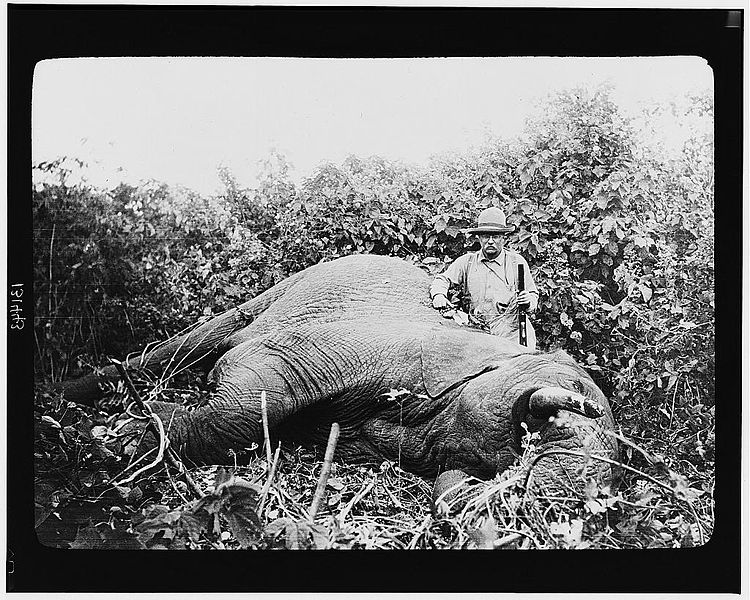
Now Aunt Della taught me many things about life in the short time I knew her. But something on Tuesday this week made me think of this particular "bit" of knowledge/wisdom. Perhaps it's the student in class researching Teddy Roosevelt for his biography project. The student considers himself a "BIG hunter" and wanted to research a hunter of "great importance." Who else but Teddy Roosevelt, right? So we had a little conversation on Monday about responsible hunting vs poaching when we ran across a picture of Teddy and an elephant that he had shot while on safari in Africa. (No worries, we're getting back to Della soon!) We talked a bit about how people who are not hunters don't understand the concept of responsible hunting, but it's a big part of conservation, and Teddy's way of thinking. This man did more for the each and preserving land and habitats than any one person with the development of the National Parks System.
Each morning I have the students write for about 10 minutes-- first thing. Sometimes there is a topic, sometimes not. Sometimes we discuss it, sometimes not. Sometimes these ideas go on to become pieces, sometimes not. Part of being a writer is writing, right? It also gives me a chance to write a bit-- whatever's on my mind, or observations, or whatever. Tuesday, as always, we wrote. I wrote about Della (told you we'd get back to her!). It was her birthday, and I guess the thoughts of Monday's conversation about responsible hunting got me thinking about this particular conversation we had one day.
Della's thoughts: Everyone should hunt at some point in their lives; every child should be taken hunting by their parents. She didn't necessarily like going hunting with her father, but she did, and in doing so she learned a very important lesson:
When you kill something, it's dead.
She went on to explain her philosphy. She said that too many kids are wrapped up in movies and video games (and these were the 10+ year ago movies and video games-- not today's) and didn't understand that dead means dead. If a character gets killed in one movie, the actor comes back to act in another-- they are still seen-- still alive. The focus of so many games is to kill off characters, just to turn around and play as that character. The world doesn't work that way. When something or someone dies, they're gone forever from this world.
She told me about going hunting with her father-- and the first time she saw him kill a deer. Now, Moiless Fontenot was a responsible hunter-- when he killed an animal, that meat went to feed his family. Hwever, the animal had to be killed to do so. Watching her father kill the deer helped her truly understand the finality of death, and the effect of taking a life. In turn, she also learned how precious life is, and that it is not to be taken lightly. Her point? If people truly understood the meaning of death-- of watching something die to never exist again, perhaps a sensitivity to life may occur. She seemed to long for the violence in youth (as provided for by parents) to be turned around to an attitude that values life, rather than searching for ways to destroy it.
Something to think about...
April 1:
Current events
As I said above, sometimes I give the students a topic to write about. Wednesday's topic was as follows: (keep in mind we're all familiar with the terms and have discussed immigration in the class before)
Zeituni Onyango is from Kenya. She's been going back and forth between Kenya and the United States since 1975. She has lived in America for a number of years, but has not filed for citizenship. In 2004, she was ordered to return to Kenya due to her illegal status. She has recently been found living in public housing in Boston (public housing is funded by taxes). She is still not registered; she is still considered illegal. Should she have to go back to Kenya?
I let the kids write for about 5 minutes or so, and then said,
"Oh, yeah! Zeituni Onyango is President Obama's aunt."
This day, we shared our writing. Wow-- the response was quite interesting. (I took notes during sharing time to make sure I got things right)
"She's not paying taxes. Why should she be allowed to live in public housing that OUR parents help pay for? She should go back. She's had plenty of time to do things legally, and she didn't."
"She's still an illegal alien. The law says she has to go back."
"Back she goes! It's not fair for her to not pay taxes and live as an American- aunt or not."
"She should get to stay, because she's Obama's aunt." (this one sparked great revolt among the third graders)
"She should take the lead and go back because it's the law. Her example might influence others to follow the law."
"She should go to Kenya. It doesn't matter if she's Obama's aunt. She's still a person and has responsibilities."
"She should be an example BECAUSE she's Obama's aunt. She should be a good role model and do the right thing."
"She should go back and do things the right way. My step-mom came from Mexico illegally. She saw how wonderful America was, so she went back to Mexico, and filed all the paperwork, and went through citizenship classes. She's now a taxpaying citizen. Zeituni had plenty of time to do the same, and she didn't. She should go back."
"She's a grown woman and should know better. It doesn't matter if she's Obama's aunt. She can't just do what she wants."
"She should have to go back. She's living off of us--she should have to pay taxes, but she doesn't. It's not fair." (That was the "straight-line democrat" I've written about previously)
"She should fill out the paperwork, get a job so that she can pay for her own housing."
"If President Obama is going to be president, he needs to be. Tell her she needs to do things according to the law, not just say 'I'm Obama's aunt' so that she can break it."
The next day, I brought in an article about Zeituni's hearning on Wednesday. She was granted an extension until February 2010 to complete asylum paperwork.
The students had the same questions I did. Why? How? Did it have anything to do with her being related to the presidet?
However, the hearing was closed to the media, so chances are, those questions will go unanswered for the general public. Since the questions are unanswered, there is great doubt in the minds of the students. However, one student asked a question that I could answer:
"We get to start voting when we're 18, right?"
"Right."
March 30:
Aunt Della's birthday
Now Aunt Della taught me many things about life in the short time I knew her. But something on Tuesday this week made me think of this particular "bit" of knowledge/wisdom. Perhaps it's the student in class researching Teddy Roosevelt for his biography project. The student considers himself a "BIG hunter" and wanted to research a hunter of "great importance." Who else but Teddy Roosevelt, right? So we had a little conversation on Monday about responsible hunting vs poaching when we ran across a picture of Teddy and an elephant that he had shot while on safari in Africa. (No worries, we're getting back to Della soon!) We talked a bit about how people who are not hunters don't understand the concept of responsible hunting, but it's a big part of conservation, and Teddy's way of thinking. This man did more for the each and preserving land and habitats than any one person with the development of the National Parks System.
Each morning I have the students write for about 10 minutes-- first thing. Sometimes there is a topic, sometimes not. Sometimes we discuss it, sometimes not. Sometimes these ideas go on to become pieces, sometimes not. Part of being a writer is writing, right? It also gives me a chance to write a bit-- whatever's on my mind, or observations, or whatever. Tuesday, as always, we wrote. I wrote about Della (told you we'd get back to her!). It was her birthday, and I guess the thoughts of Monday's conversation about responsible hunting got me thinking about this particular conversation we had one day.
Della's thoughts: Everyone should hunt at some point in their lives; every child should be taken hunting by their parents. She didn't necessarily like going hunting with her father, but she did, and in doing so she learned a very important lesson:
When you kill something, it's dead.
She went on to explain her philosphy. She said that too many kids are wrapped up in movies and video games (and these were the 10+ year ago movies and video games-- not today's) and didn't understand that dead means dead. If a character gets killed in one movie, the actor comes back to act in another-- they are still seen-- still alive. The focus of so many games is to kill off characters, just to turn around and play as that character. The world doesn't work that way. When something or someone dies, they're gone forever from this world.
She told me about going hunting with her father-- and the first time she saw him kill a deer. Now, Moiless Fontenot was a responsible hunter-- when he killed an animal, that meat went to feed his family. Hwever, the animal had to be killed to do so. Watching her father kill the deer helped her truly understand the finality of death, and the effect of taking a life. In turn, she also learned how precious life is, and that it is not to be taken lightly. Her point? If people truly understood the meaning of death-- of watching something die to never exist again, perhaps a sensitivity to life may occur. She seemed to long for the violence in youth (as provided for by parents) to be turned around to an attitude that values life, rather than searching for ways to destroy it.
Something to think about...
April 1:
Current events
As I said above, sometimes I give the students a topic to write about. Wednesday's topic was as follows: (keep in mind we're all familiar with the terms and have discussed immigration in the class before)
Zeituni Onyango is from Kenya. She's been going back and forth between Kenya and the United States since 1975. She has lived in America for a number of years, but has not filed for citizenship. In 2004, she was ordered to return to Kenya due to her illegal status. She has recently been found living in public housing in Boston (public housing is funded by taxes). She is still not registered; she is still considered illegal. Should she have to go back to Kenya?
I let the kids write for about 5 minutes or so, and then said,
"Oh, yeah! Zeituni Onyango is President Obama's aunt."
This day, we shared our writing. Wow-- the response was quite interesting. (I took notes during sharing time to make sure I got things right)
"She's not paying taxes. Why should she be allowed to live in public housing that OUR parents help pay for? She should go back. She's had plenty of time to do things legally, and she didn't."
"She's still an illegal alien. The law says she has to go back."
"Back she goes! It's not fair for her to not pay taxes and live as an American- aunt or not."
"She should get to stay, because she's Obama's aunt." (this one sparked great revolt among the third graders)
"She should take the lead and go back because it's the law. Her example might influence others to follow the law."
"She should go to Kenya. It doesn't matter if she's Obama's aunt. She's still a person and has responsibilities."
"She should be an example BECAUSE she's Obama's aunt. She should be a good role model and do the right thing."
"She should go back and do things the right way. My step-mom came from Mexico illegally. She saw how wonderful America was, so she went back to Mexico, and filed all the paperwork, and went through citizenship classes. She's now a taxpaying citizen. Zeituni had plenty of time to do the same, and she didn't. She should go back."
"She's a grown woman and should know better. It doesn't matter if she's Obama's aunt. She can't just do what she wants."
"She should have to go back. She's living off of us--she should have to pay taxes, but she doesn't. It's not fair." (That was the "straight-line democrat" I've written about previously)
"She should fill out the paperwork, get a job so that she can pay for her own housing."
"If President Obama is going to be president, he needs to be. Tell her she needs to do things according to the law, not just say 'I'm Obama's aunt' so that she can break it."
The next day, I brought in an article about Zeituni's hearning on Wednesday. She was granted an extension until February 2010 to complete asylum paperwork.
The students had the same questions I did. Why? How? Did it have anything to do with her being related to the presidet?
However, the hearing was closed to the media, so chances are, those questions will go unanswered for the general public. Since the questions are unanswered, there is great doubt in the minds of the students. However, one student asked a question that I could answer:
"We get to start voting when we're 18, right?"
"Right."
Subscribe to:
Posts (Atom)